

From the City Walls to the Creativity Hub: participatory evaluation meets local government in Ferrara
Students and associations presented the results of two civic monitoring and participatory evaluation exercises focused on the Look-Up! territorial strategy. From accessibility along the city walls to spaces for cultural activities, the discussion with the local administration brought responses and announcements on some of the issues raised. The regional pilot also involved children and young people in Rimini.
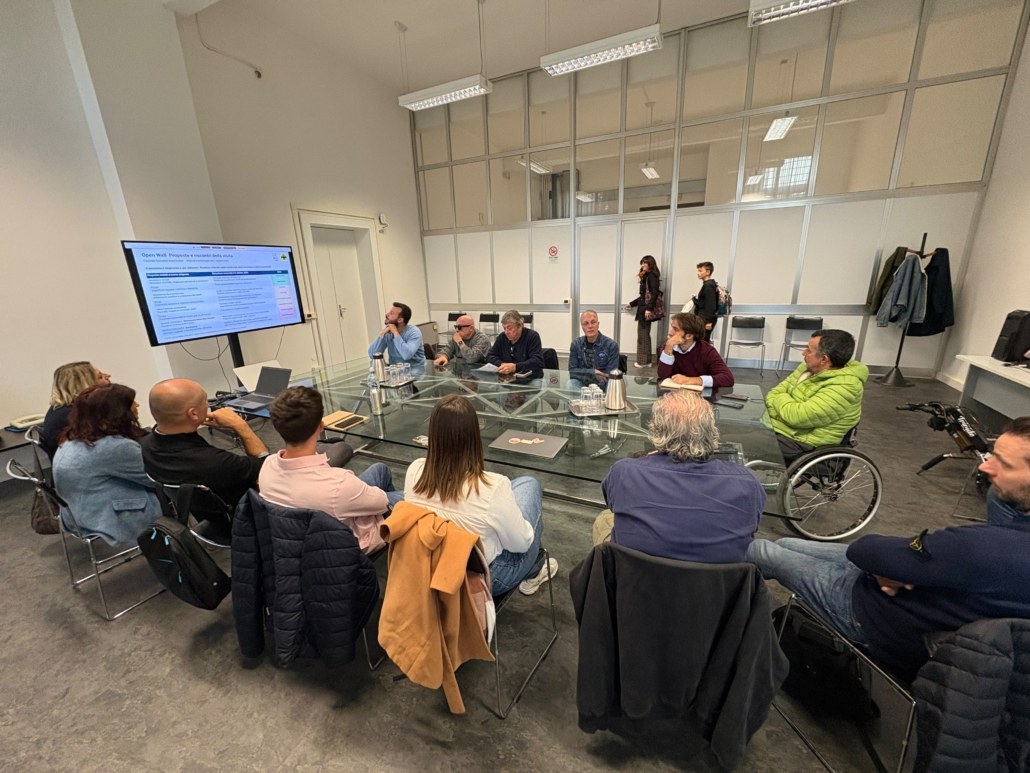
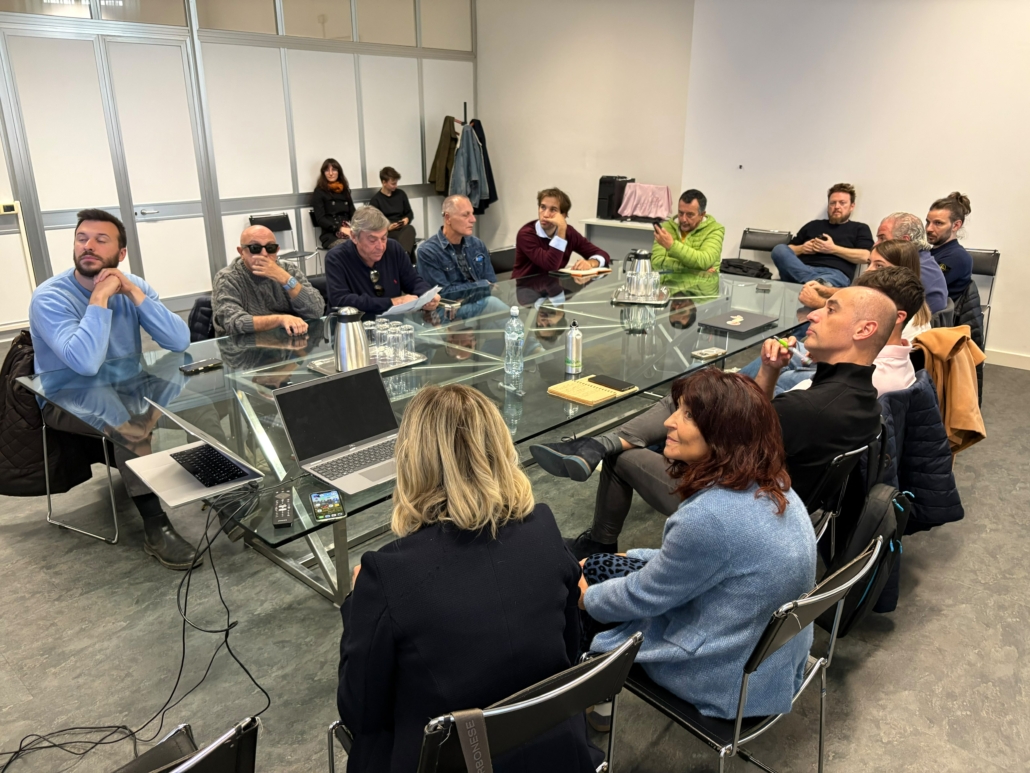
What happens when the people who use a public space meet those who designed and created it? In Ferrara, participatory evaluation provided an opportunity to bring students, associations, technical experts and public officials around the same table, comparing observations gathered in the field with the decisions and constraints involved in public projects.
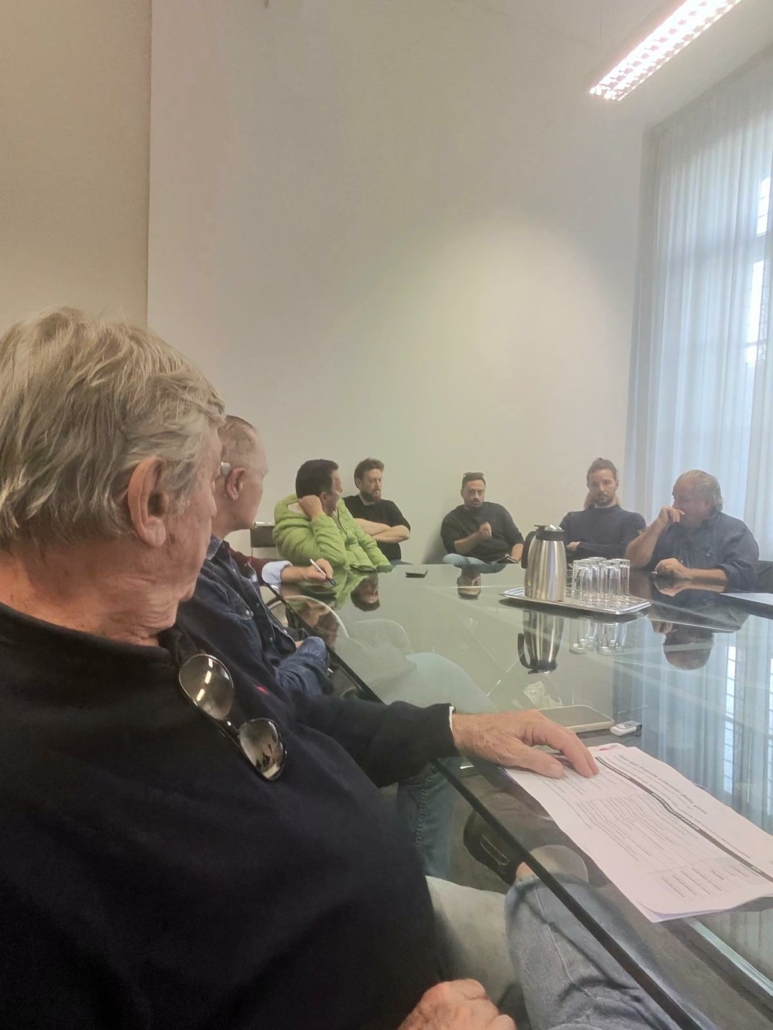
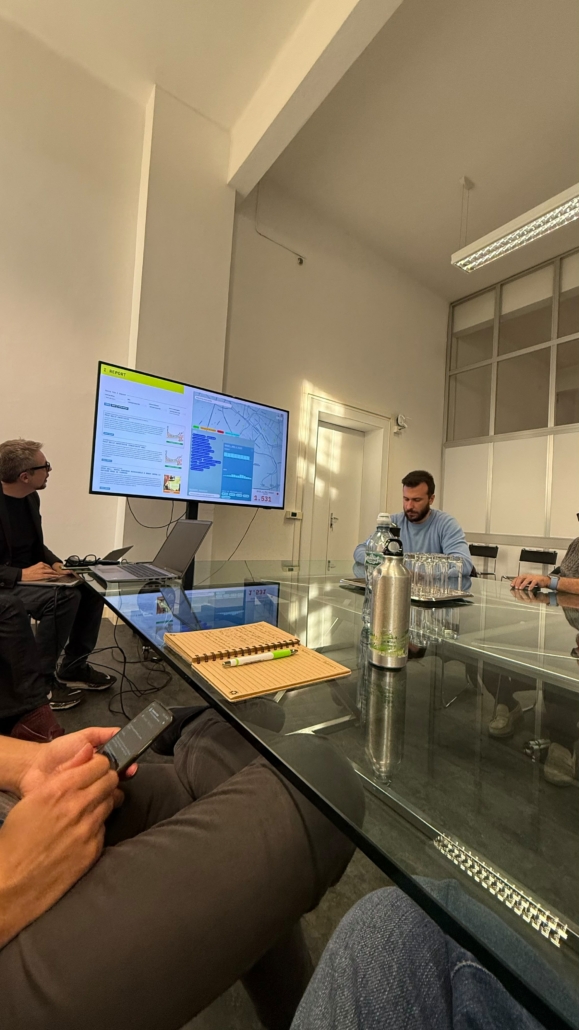
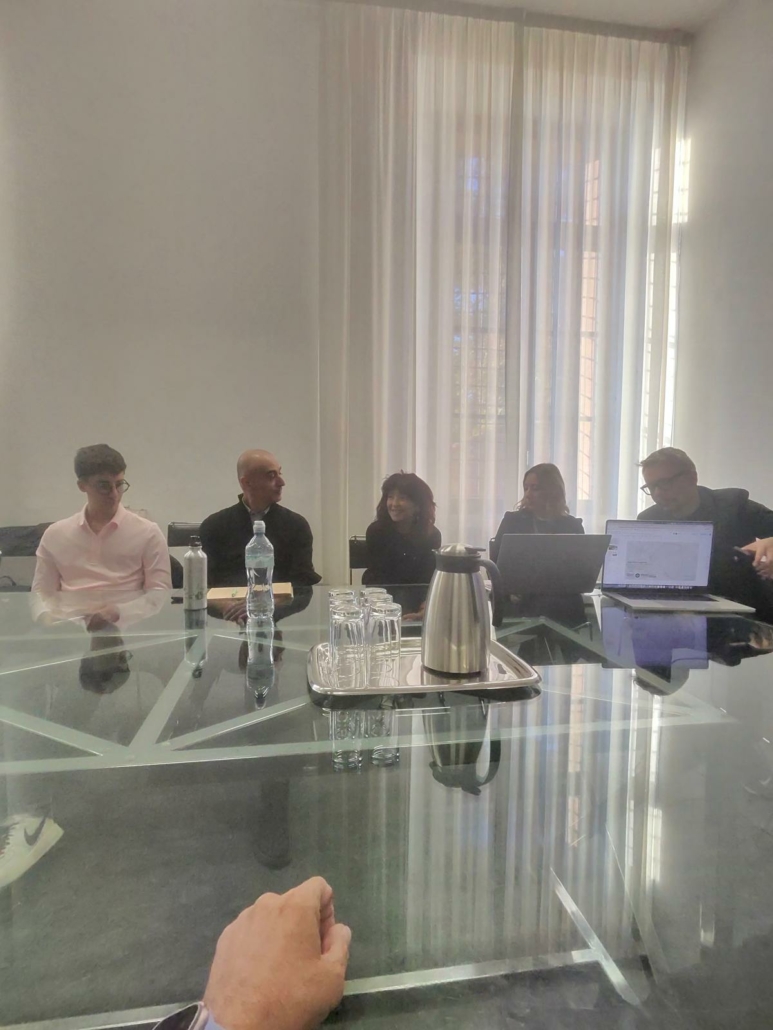
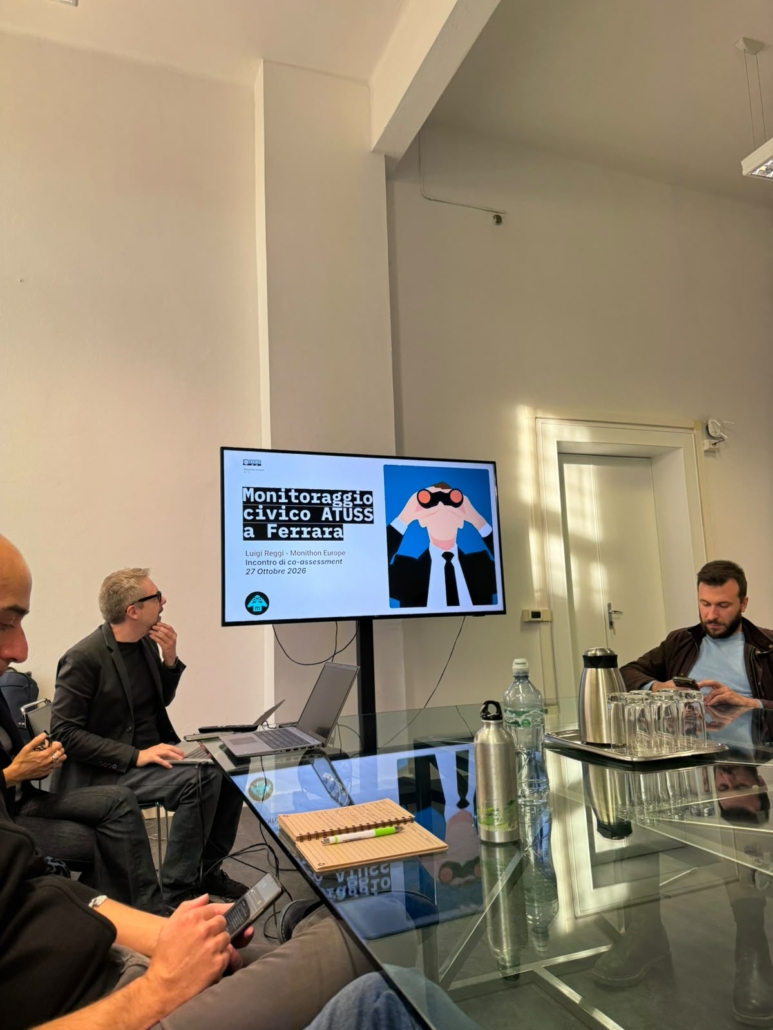
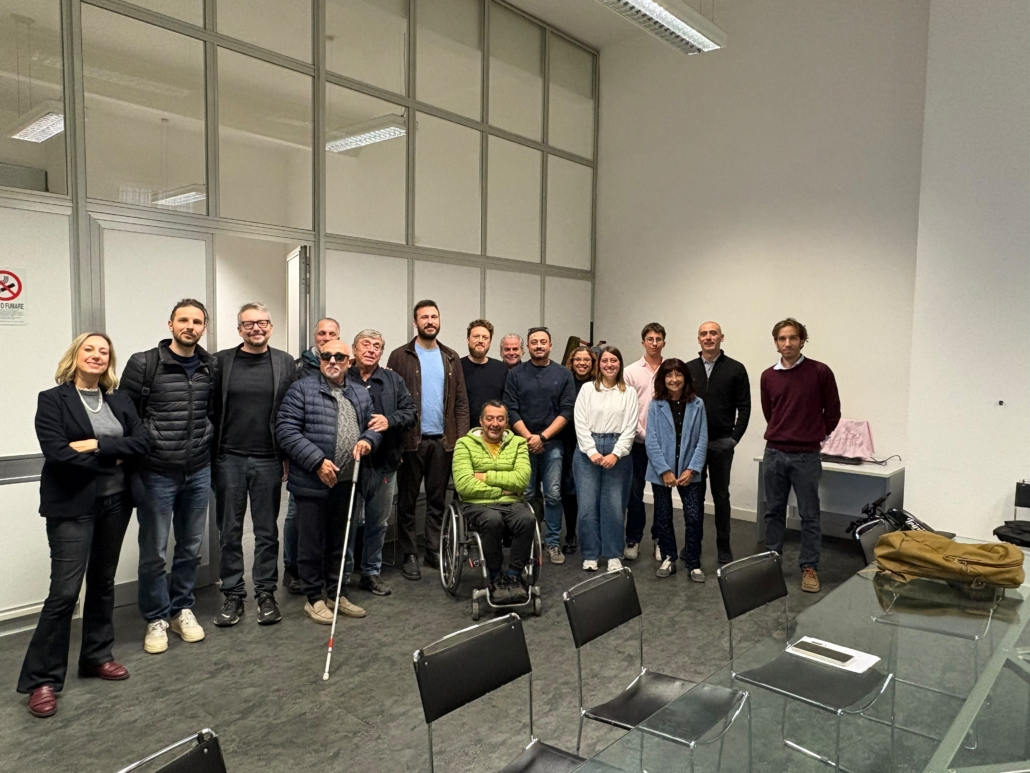
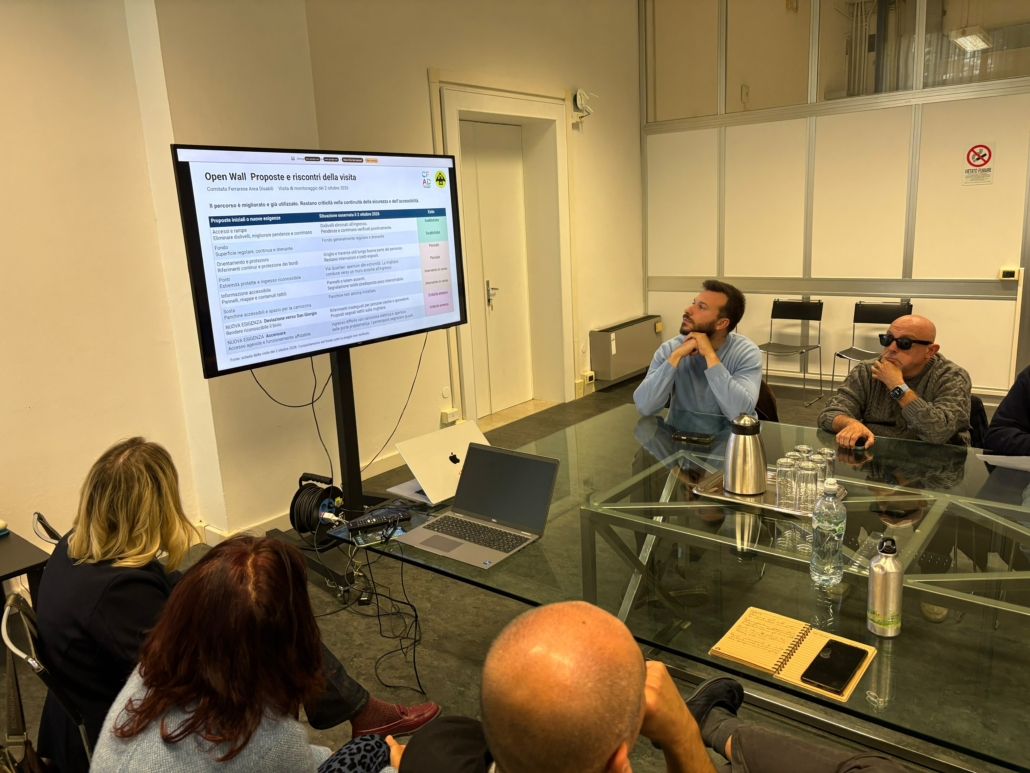
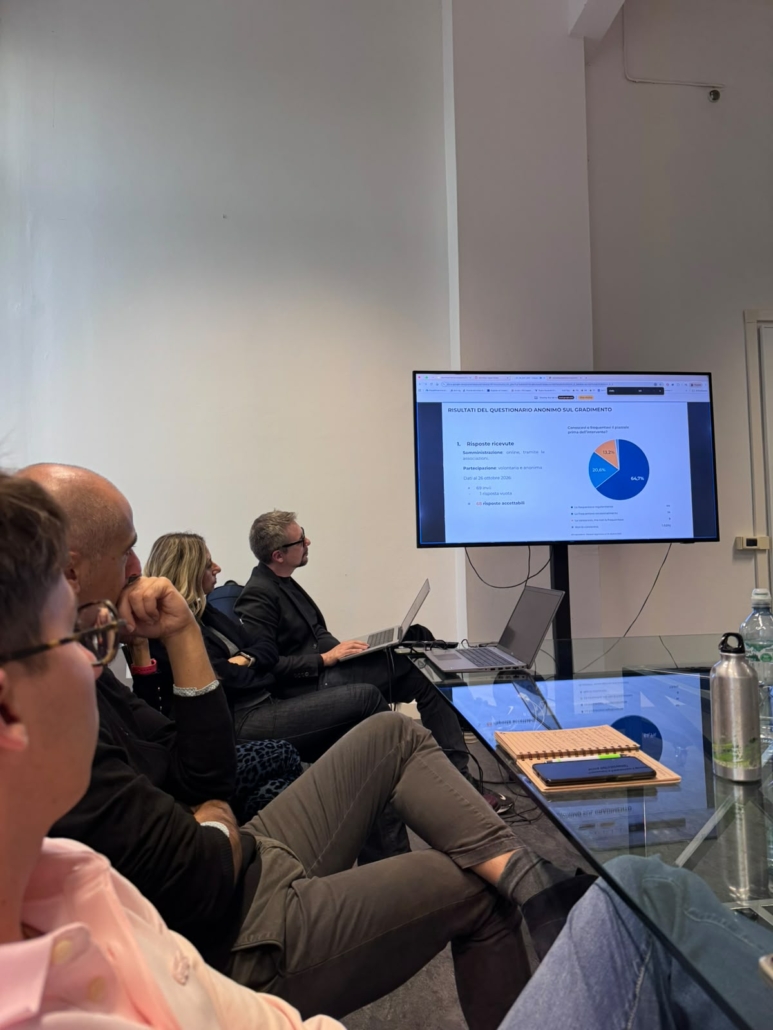
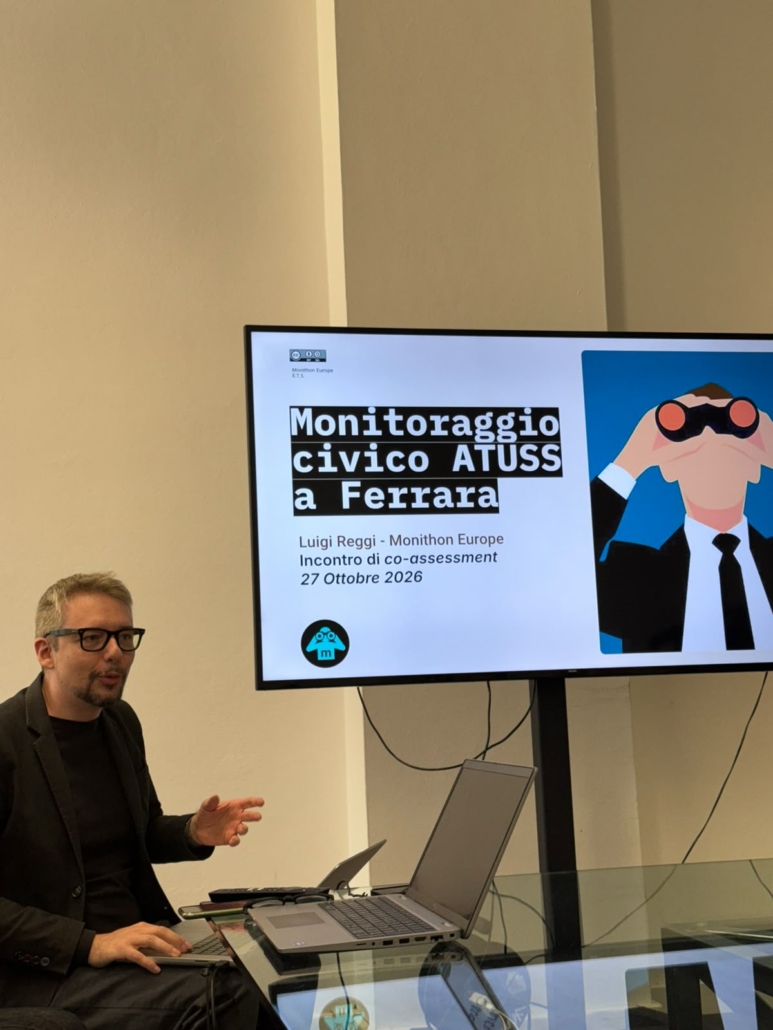
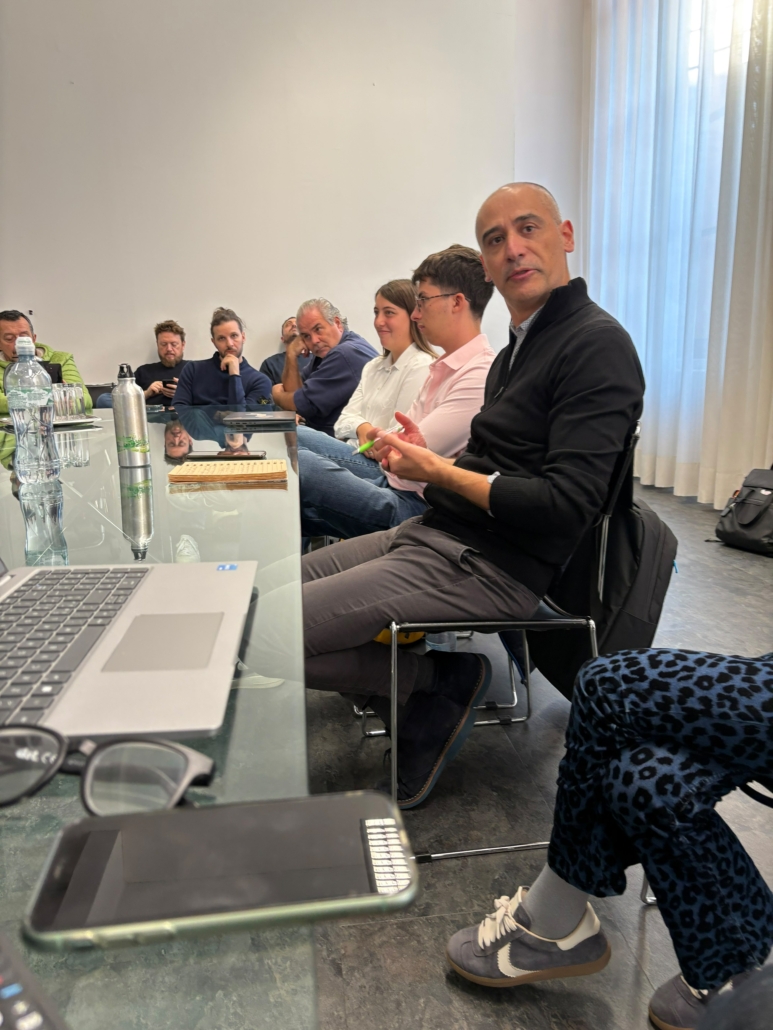
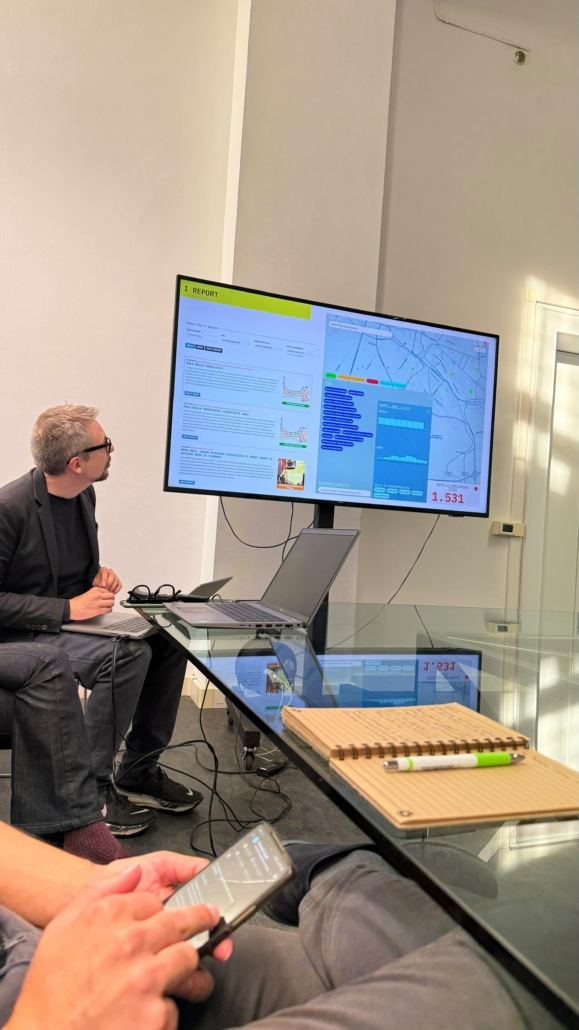
On 27 October 2026, the results of the participatory evaluation of two projects within the Look-Up! territorial strategy were presented at Ferrara City Hall: the Creativity Hub, between the Bagni Ducali and the Slavich Cultural Centre, and Open Wall, the accessible walkway along the southern city walls.
The meeting concluded one phase of the pilot promoted by the Emilia-Romagna Region and supported by Monithon Europe, in collaboration with the municipalities of Ferrara and Rimini. The initiatives are part of the EU-funded ATUSS – Transformative Urban Agendas for Sustainable Development.
For some of the problems identified, the Municipality described solutions being prepared or options under consideration. The outcomes of this discussion can be followed over time to see how the announcements translate into concrete action.
A process built together
Monithon designed the participatory evaluation process and supported the groups through its different stages: from choosing the questions to be answered to gathering evidence, drafting reports and presenting the findings to public administrations.
In Ferrara, the process included four meetings to launch the work and equip participants with methods, skills and tools for examining the projects. Alongside the analysis of public data and project documents, participants prepared their fieldwork and received support in interpreting the results.
To help the groups collect useful and comparable information, Monithon developed fieldwork tools, including an interview guide, a user questionnaire and a site visit form. It also supported participants in preparing the final civic monitoring reports, which were published online and used as a basis for discussion with the Municipality.
The aim was to bring different forms of knowledge into dialogue: those of people who experience the places in their everyday lives, those of the groups carrying out the evaluation, and those of the technical experts and public officials responsible for the projects.
The Creativity Hub: a renewed space for culture and everyday needs
The Creativity Hub has a long history: it has served as a defensive bastion and an industrial site, before becoming a place for cultural, musical and theatrical activities. The intervention under the Look-Up! strategy aims to improve the outdoor spaces and connections, building on this cultural role and creating new opportunities for people to meet.
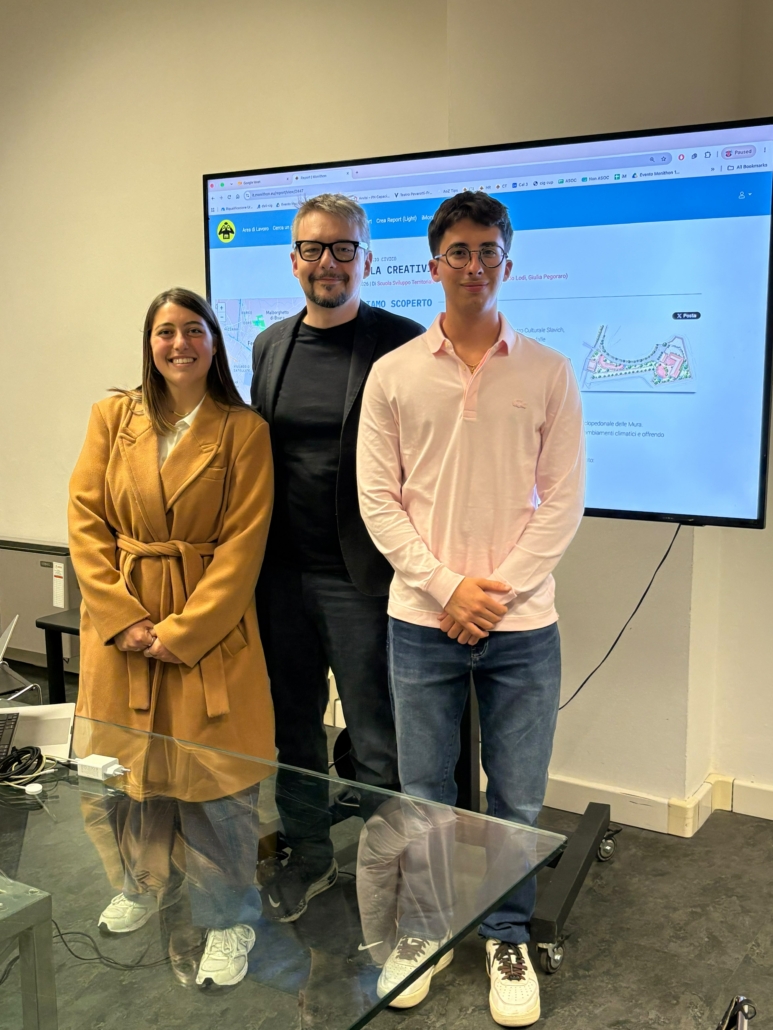
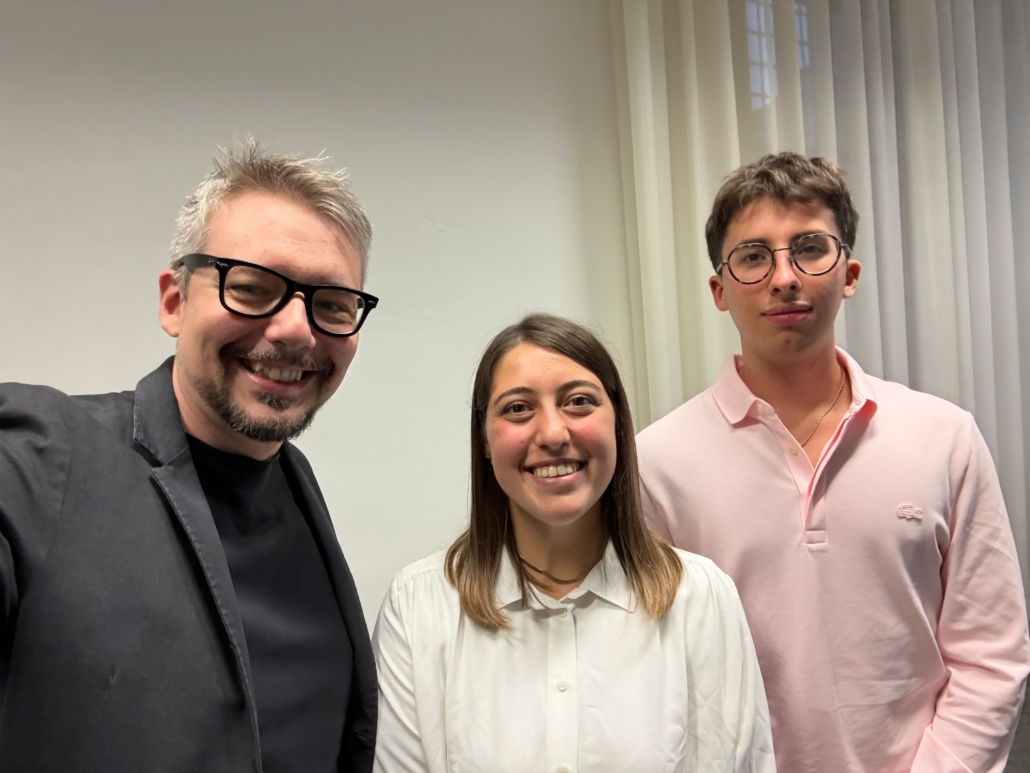
The participatory evaluation was carried out by Giulia Pegoraro, Alessandro Casotti and Guido Lodi of the Ferrara School of Territorial Development. With methodological support from Monithon, the group analysed data and project documents, visited the area with the works supervisor, interviewed associations and gathered users’ perspectives through a questionnaire. The students also told the story of their work in a video presented at the meeting.
The civic monitoring report recognises an improvement in the quality of the spaces and new opportunities for cultural activities and social interaction. At the same time, it highlights different needs: those of people who would like a forecourt with fewer cars, and those who need to transport instruments and equipment or accompany people with mobility difficulties.
The proposals included better rules for access and loading and unloading areas, as well as an assessment of an alternative parking area nearby, close to the Aqueduct.
During the meeting, Deputy Mayor Alessandro Balboni explained that the municipal offices were already considering that very area. His response showed a convergence between the students’ proposal and an option already being examined by the administration.
Balboni also announced plans to use savings from the works budget for improvements requested by the associations, including facilities, green areas, seating tiers and outdoor furniture. Discussions about these needs were already under way before the reports were presented; the participatory evaluation helped bring them together and raise them in a public discussion.
The associations present recognised the value of dialogue with the Municipality and also looked ahead to future projects. In particular, the Corale Veneziani choir suggested involving organisations that use the spaces from the earliest stages of design—a recommendation welcomed by the Deputy Mayor.
Open Wall: assessing accessibility with the people who use the city walls
The participatory evaluation of Open Wall was conducted by the Ferrara Disability Committee, a network of associations representing the needs of people with disabilities and their families.
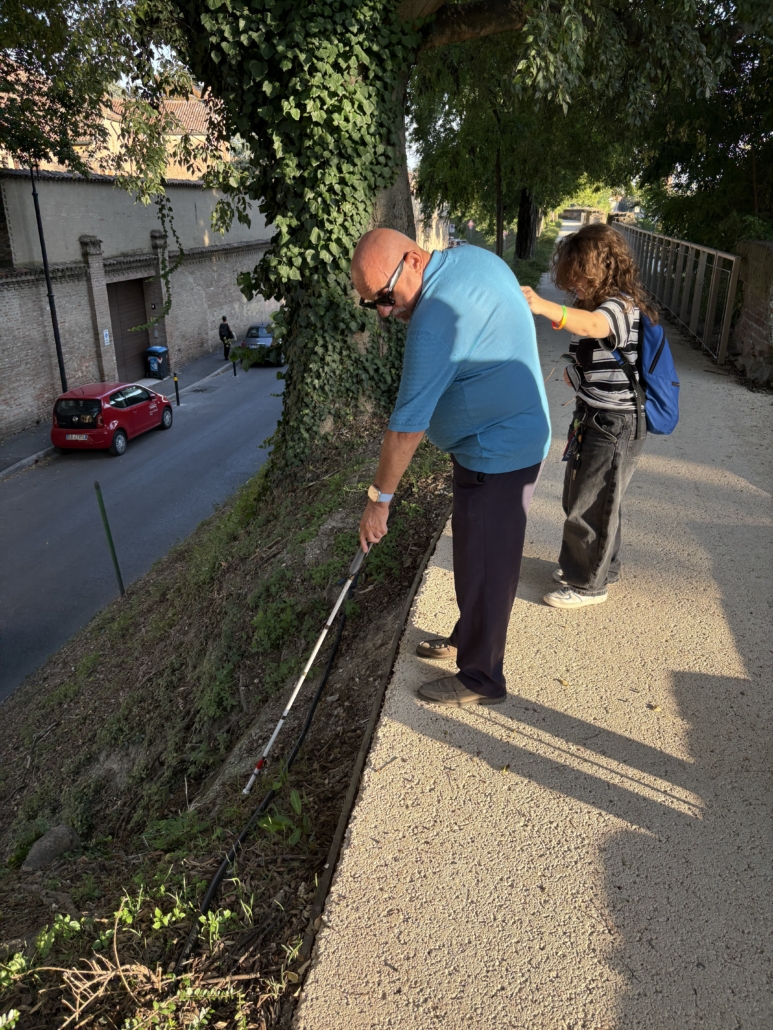
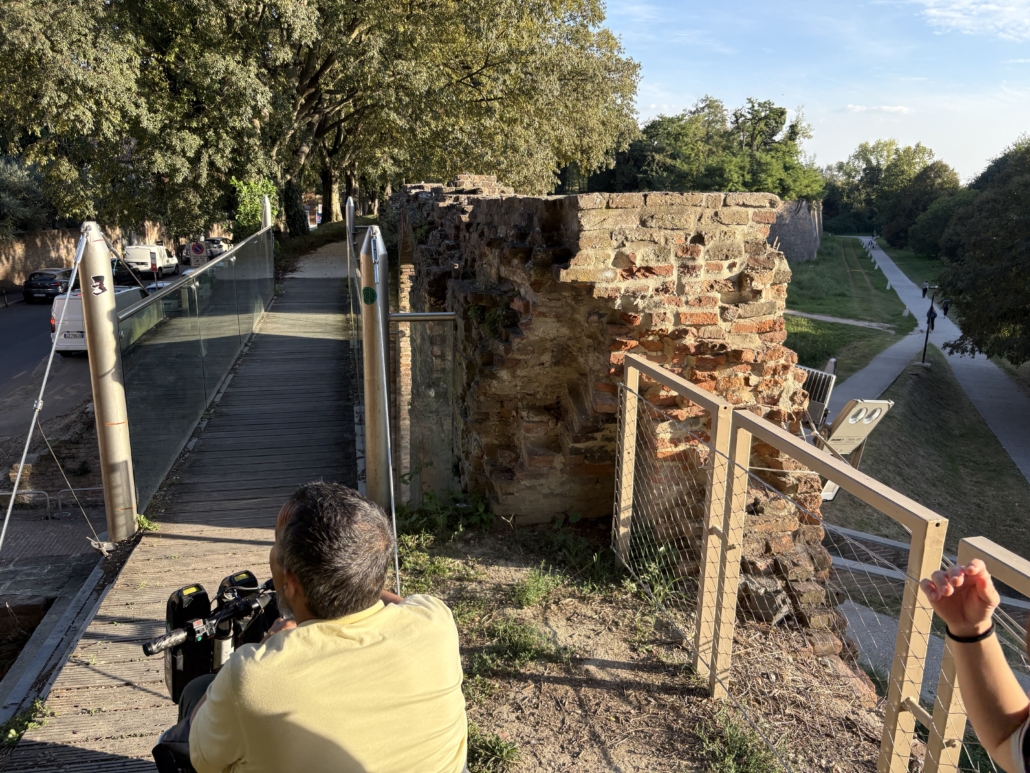
The Committee had already taken part in discussions on accessibility solutions during the design phase. The site visit on 2 October 2026 offered an opportunity to return to the route and compare the earlier recommendations with the actual experience of people who use it today.
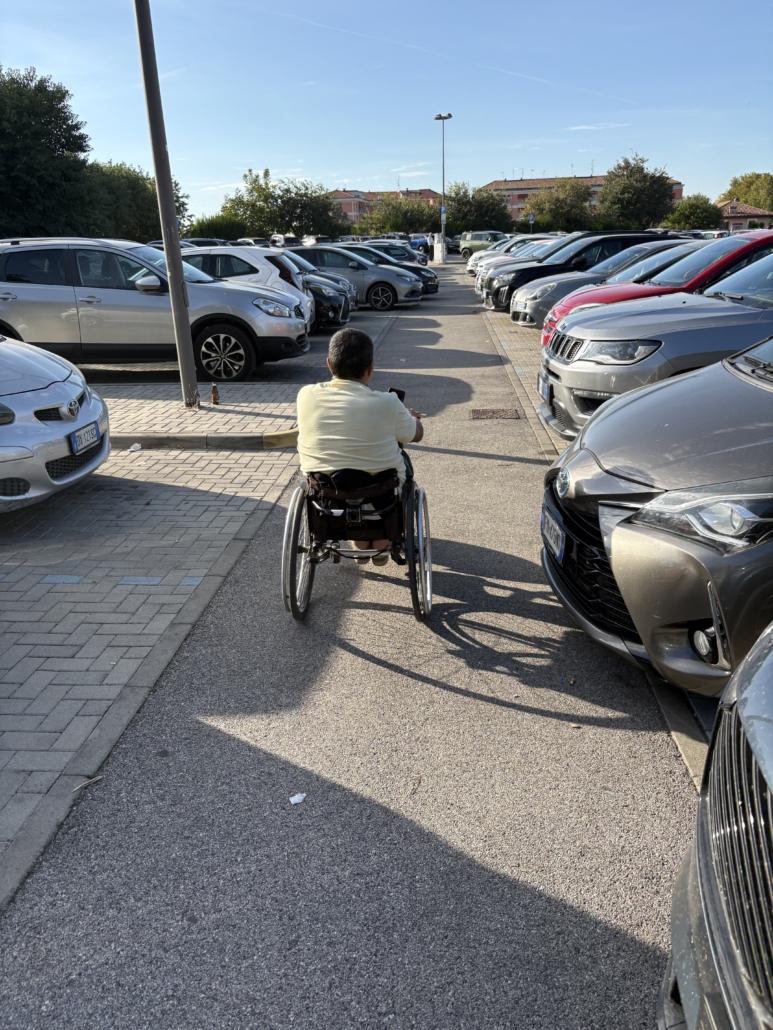
The report identifies several improvements: a more even and easier-to-use walkway, the removal of some changes in level, and features that help people find their way along much of the route. At the same time, it highlights outstanding issues, including protection along certain sections, accessible information, the operation of the lift and obstacles that interrupt accessible routes.
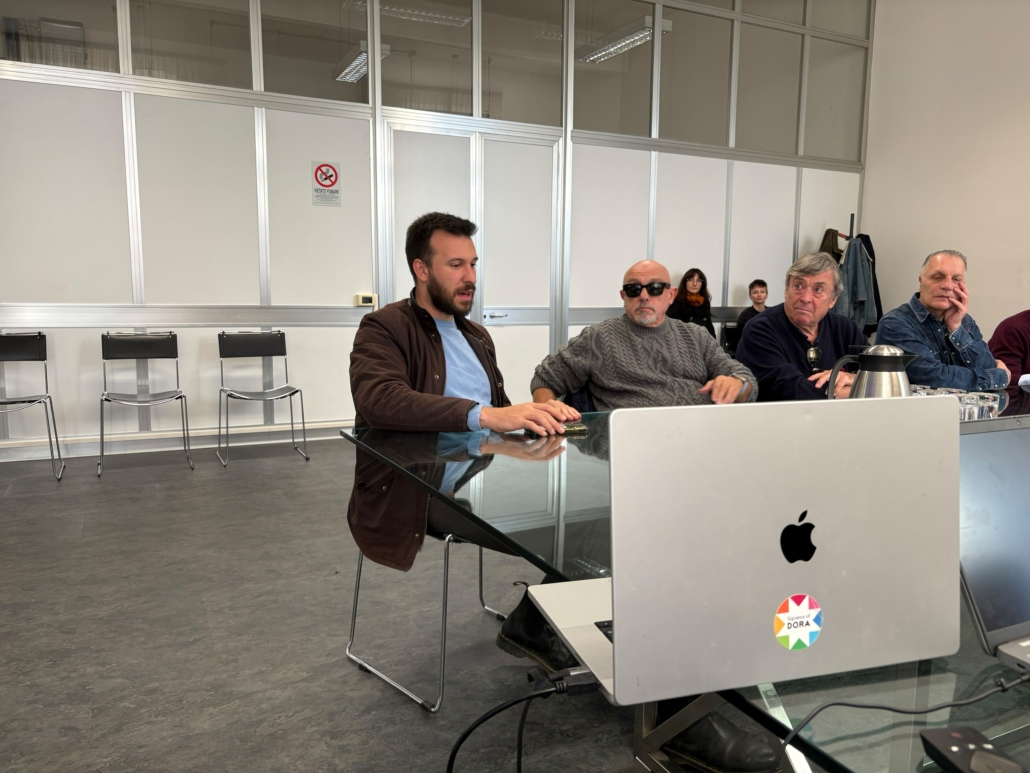
Presenting the results, Claudio Mari addressed both the progress made and the points requiring attention. He observed that discussions with the Municipality had helped prevent conceptual errors and keep the needs of people with disabilities at the centre.
The project manager speaking for the Municipality provided several responses: the accessible benches were ready to be installed between late November and early December; the completion of the grilles and tactile routes was imminent; and work was also planned on the pavement near Piazza Travaglio to prevent parked cars from obstructing the passage.
The meeting also covered the work carried out with the heritage authority to reconcile safety requirements with the protection of the city walls. The implementation of the announced measures and the reported difficulties accessing the lift remain to be verified.
In Rimini, the seafront through young people’s eyes
The regional pilot also involved Rimini, where the Children and Young People’s City Council evaluated the intervention in the Parco del Mare area of San Giuliano Mare.
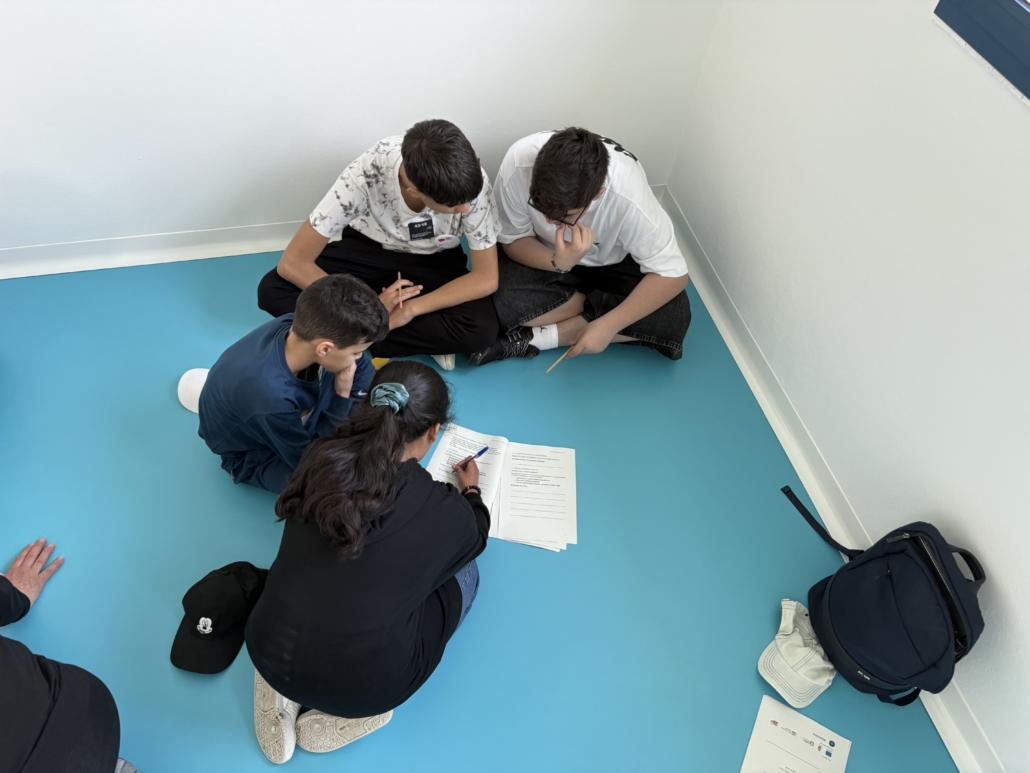
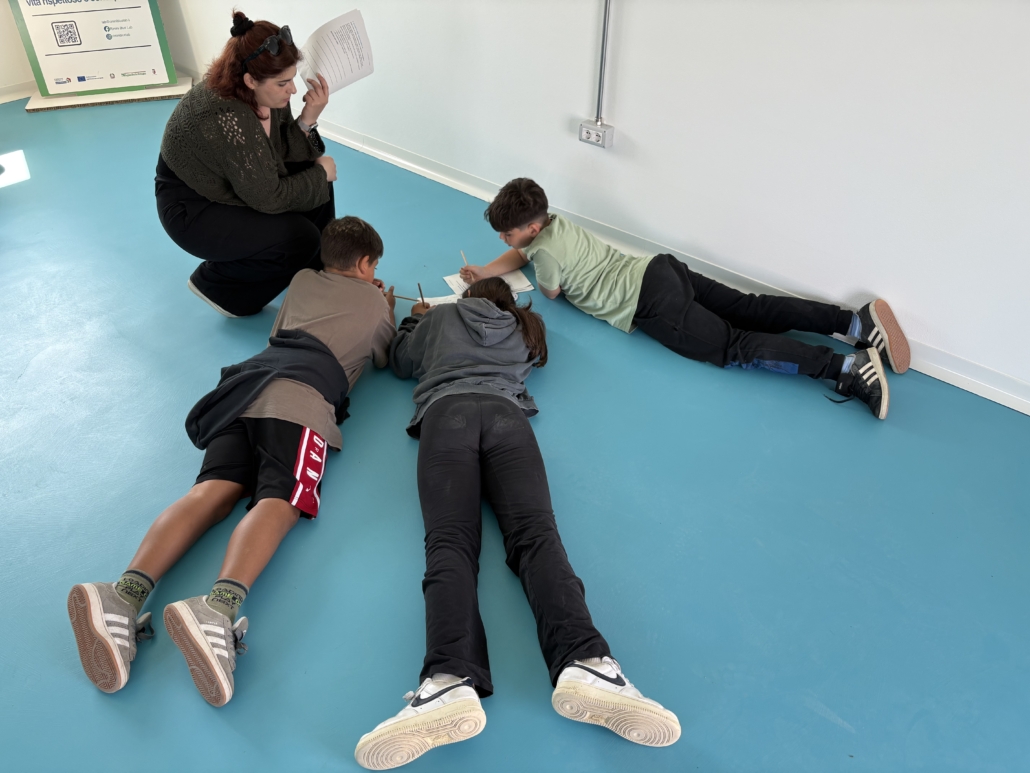
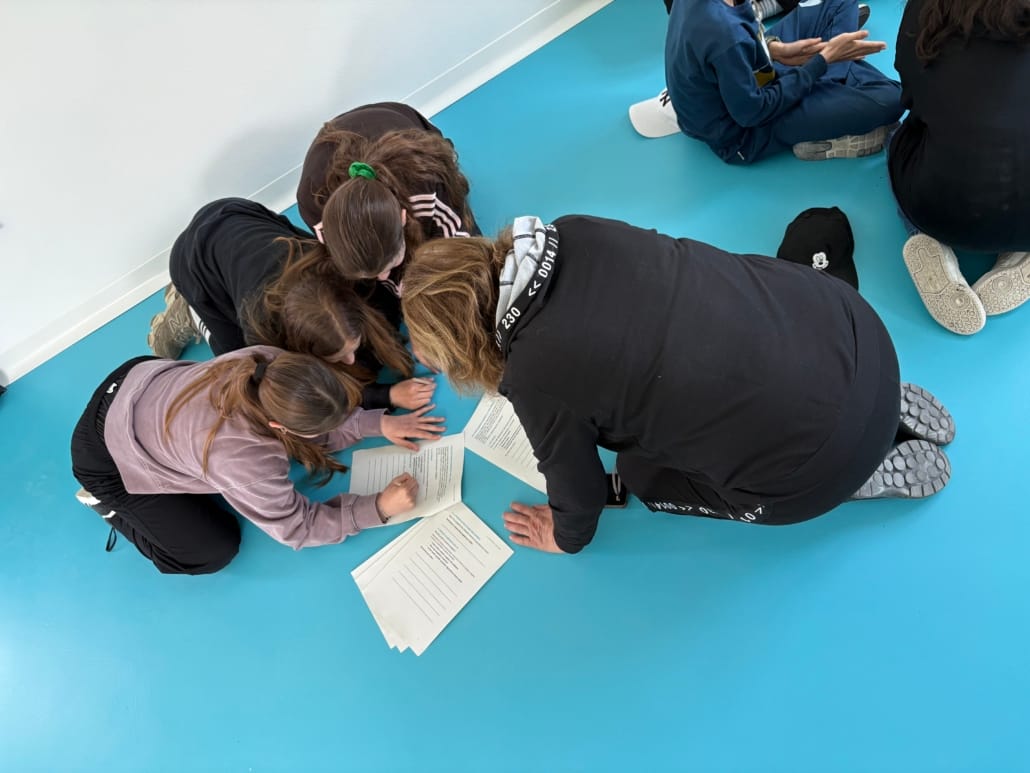
Working in groups, the young participants examined the project from different perspectives, including accessibility, safety and environmental protection. Their report presents an overall positive assessment and recognises protection from coastal risks as one of the intervention’s benefits.
Here, too, participatory evaluation made it possible to look at an urban transformation through the eyes of people who spend time in the area, gathering observations about use of the seafront and the needs of the community.



From individual projects to the territorial strategy
The experiences in Ferrara and Rimini show that participatory evaluation can accompany public investments beyond the initial design phase. Analysing documents, visiting sites and listening to the people who use them adds information about how projects work in practice to the administrative evidence.
At the Ferrara meeting, representatives of the Emilia-Romagna Region highlighted their interest in the contribution this evidence can make to the evaluation of territorial strategies. Local perspectives can help reveal not only how works are progressing, but also what happens after they are completed and whether the expected benefits last over time.
The Region expressed interest in exploring the possible extension of the experience to other areas. For Monithon, the next step is to continue following the issues raised and making use of the knowledge gathered, so that dialogue between communities and institutions can also accompany future projects.
Further information
- The project page: working with the Emilia-Romagna Region
- The Creativity Hub report
- The Slavich Centre site visit notebook
- The School of Territorial Development’s presentation at the final event
- The questionnaire data
- The Open Wall report
- The city walls site visit form
- The report on Parco del Mare in San Giuliano Mare
Photo gallery


Leave a Reply
Want to join the discussion?Feel free to contribute!