
• Twitter
  • Facebook
  • Instagram
  • Linkedin
  • LOG IN
    • Albania
    • Austria
    • Bulgaria
    • Croatia
    • France
    • Greece
    • Italy
    • Poland
    • Portugal
    • Slovenia
    • Spain (Catalonia)
    • Other countries
Monithon
  • Home
  • About
  • In the press
  • Projects
  • Civic monitoring
    • What is civic monitoring
    • For Universities
    • For Civil Society
    • For Policy Makers
  • Our reports
  • Italiano
  • Menu

<<< ALL PROJECTS

Co-assessment of territorial strategies in Emilia-Romagna

2026

Main partners: Regione Emilia-Romagna, Managing Authority Regional Programme ERDF 2021-2027.
Comune di Ferrara. Comune di Rimini.

  • Objectives

    How can we understand whether an intervention funded by the European Union meets the needs of the people who use it? And how can we gather knowledge that is also useful for evaluating territorial development strategies?

    To answer these questions, Monithon worked with the Emilia-Romagna Region and the municipalities of Ferrara and Rimini on a pilot civic monitoring initiative focused on selected interventions within the ATUSS – Transformative Urban Agendas for Sustainable Development.

    The initiative involved associations, university students, children and young people in analysing projects, observing the places concerned and engaging with public administrations. The aim is to complement official data and information with the perspectives of people who use the spaces and services, in order to recognise achievements, identify potential problems and propose improvements.

    In the longer term, the initiative also aims to contribute to the evaluation of territorial strategies as a whole: the experiences gathered from individual interventions can provide useful insights into how urban transformations respond to community needs and help guide future planning.

  • How we worked

    In both cities, Monithon supported the participating groups through training and methodological guidance. The work combined the analysis of public data and project documents with site visits, interviews, surveys and discussions with those involved.

    Each group examined an intervention in light of its own questions and expertise: from the accessibility of a historic walkway to the use of spaces for cultural activities, and the quality and safety of an area along the seafront.

    The observations and proposals are brought together in public reports, designed as tools for building knowledge and dialogue with public administrations and local communities.

  • Results

    In Ferrara, the pilot focused on two interventions within the Look-Up! strategy.

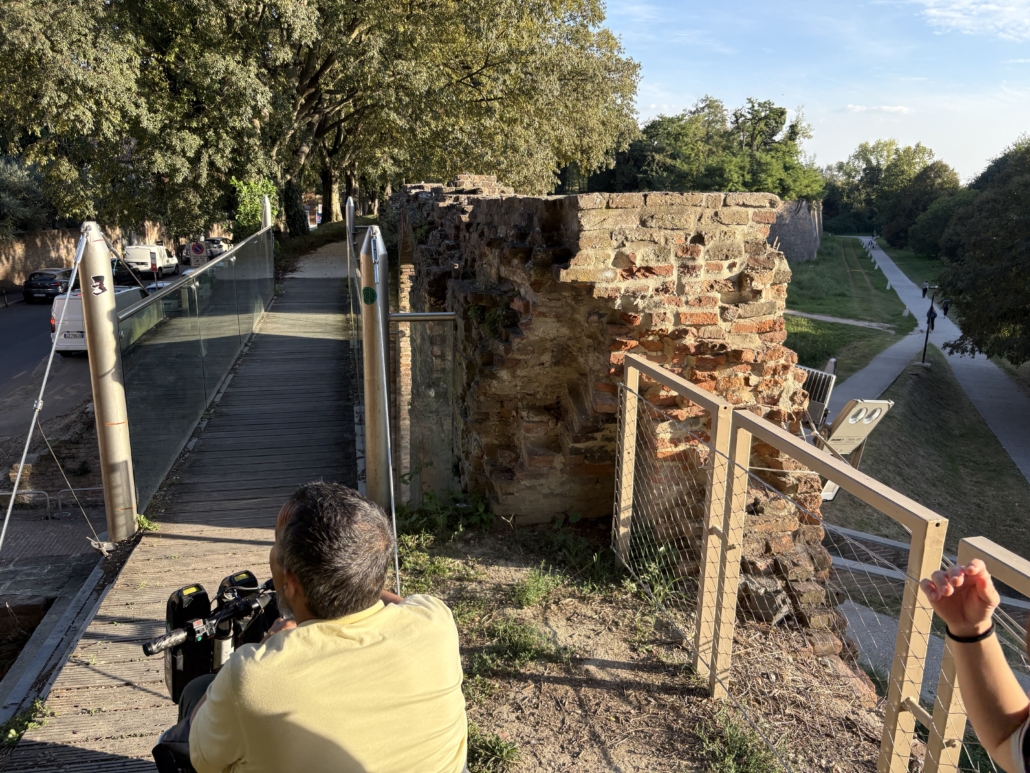
    The Ferrara Disability Committee monitored Open Wall, an accessible walkway along the southern section of the city walls. The site visit provided an opportunity to assess the completed work against the experiences of people with disabilities and the recommendations previously made by the Committee during the design phase. The group recognised improvements in how easily the route can be used, while also identifying issues requiring further attention, including safety along certain sections, wayfinding and uninterrupted access.

    The Ferrara School of Territorial Development, with the involvement of students, monitored the Creativity Hub, located between the Slavich Cultural Centre and the Bagni Ducali. Through site visits, interviews and a user survey, the group gathered perspectives on the new spaces and their use for cultural activities and social gatherings. The findings highlighted improvements in the quality of the spaces, as well as differing needs relating to access, parking, transporting equipment and comfort.

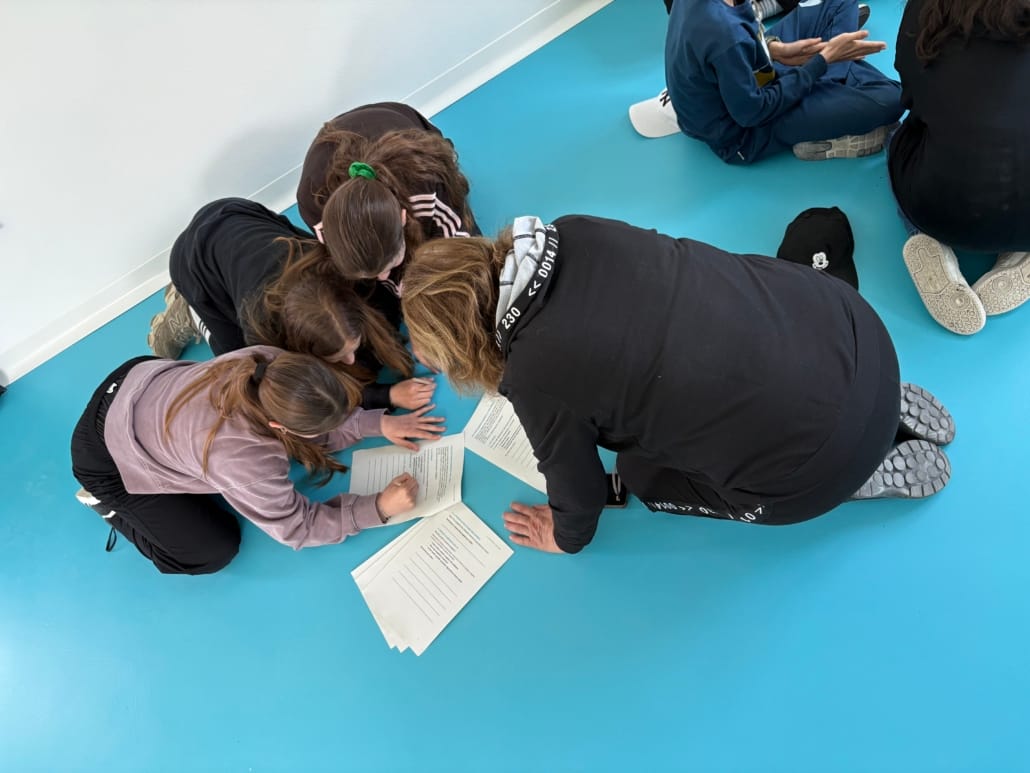
    In Rimini, the Children and Young People’s City Council monitored the intervention in the Parco del Mare area of San Giuliano Mare. Working in groups, the participants examined the project from different perspectives, including accessibility, safety and environmental protection.

    The monitoring paints an overall positive picture and recognises protection from coastal risks as one of the benefits. The young participants’ observations offer a perspective on how accessible and usable the seafront is and on the needs of the people who spend time there.

  • Cosa abbiamo imparato

    La sperimentazione mostra come il monitoraggio civico possa arricchire la conoscenza degli interventi pubblici attraverso esperienze che non sempre emergono dai documenti amministrativi: la facilità di accesso a un luogo, l’uso quotidiano degli spazi o le esigenze di chi vi organizza attività.

    Il confronto tra cittadini, associazioni, studenti, tecnici e amministrazioni aiuta a mettere in relazione punti di vista diversi, a discutere possibili miglioramenti e a rendere più comprensibili sia le opportunità offerte dagli investimenti sia i vincoli che accompagnano la loro realizzazione.

    Le indicazioni raccolte a Ferrara e Rimini costituiscono una base per proseguire il dialogo sui singoli progetti e per approfondire il contributo del monitoraggio civico alla valutazione delle strategie territoriali. L’evoluzione delle opere e l’eventuale recepimento delle proposte potranno essere seguiti nel tempo.

  • Civic monitoring reports
    • Ferrara – Open Wall: read the Ferrara Disability Committee’s report
    • Ferrara – Creativity Hub: read the School of Territorial Development’s report.
    • Rimini – Parco del Mare, San Giuliano Mare: read the Children and Young People’s City Council’s report.

Monithon Europe E.T.S.
Via Casal Bianco 352
00012 Guidonia (Roma)
info@monithon.eu
CF: 94083340581
VAT no. 17257461008

Privacy Policy
Terms of use

The methodology, tools and data produced by Monithon are published under the Creative Commons BY SA license.
You can re-use them by citing Monithon as a source and indicating any changes made. If you remix, transform, or build upon the material, you must distribute your contributions under the same license as the original.


🤍 DONATE
  • Mail
  • Twitter
  • Facebook
  • Instagram
  • LinkedIn
  • Mastodon
Aware EU
Scroll to top

This site uses cookies. By continuing to browse the site, you are agreeing to our use of cookies.

OKLearn more

Cookie and Privacy Settings

How we use cookies

We may request cookies to be set on your device. We use cookies to let us know when you visit our websites, how you interact with us, to enrich your user experience, and to customize your relationship with our website.

Click on the different category headings to find out more. You can also change some of your preferences. Note that blocking some types of cookies may impact your experience on our websites and the services we are able to offer.

Essential Website Cookies

These cookies are strictly necessary to provide you with services available through our website and to use some of its features.

Because these cookies are strictly necessary to deliver the website, you cannot refuse them without impacting how our site functions. You can block or delete them by changing your browser settings and force blocking all cookies on this website.

Other external services

We also use different external services like Google Webfonts, Google Maps and external Video providers. Since these providers may collect personal data like your IP address we allow you to block them here. Please be aware that this might heavily reduce the functionality and appearance of our site. Changes will take effect once you reload the page.

Google Webfont Settings:

Google Map Settings:

Vimeo and Youtube video embeds: